The company begins field activities and the scientific characterization of biochar produced through biomass gasification as part of the international REFFECT AFRICA project, launched in 2021 to valorize agricultural and agri-food waste and promote sustainable solutions across Africa.
Ficosterra’s technical team has travelled to South Africa to advance the field activities of REFFECT AFRICA, a European project that has been developing renewable energy solutions based on the valorization of agricultural and agri-food waste across Africa since 2021.
During the visit, Ficosterra met at the pilot plant in Cape Town with the project’s General Coordinator, Professor David Vera, together with representatives of the Instituto Tecnológico de Canarias (ITC) and the South African engineering company Energy Drop.
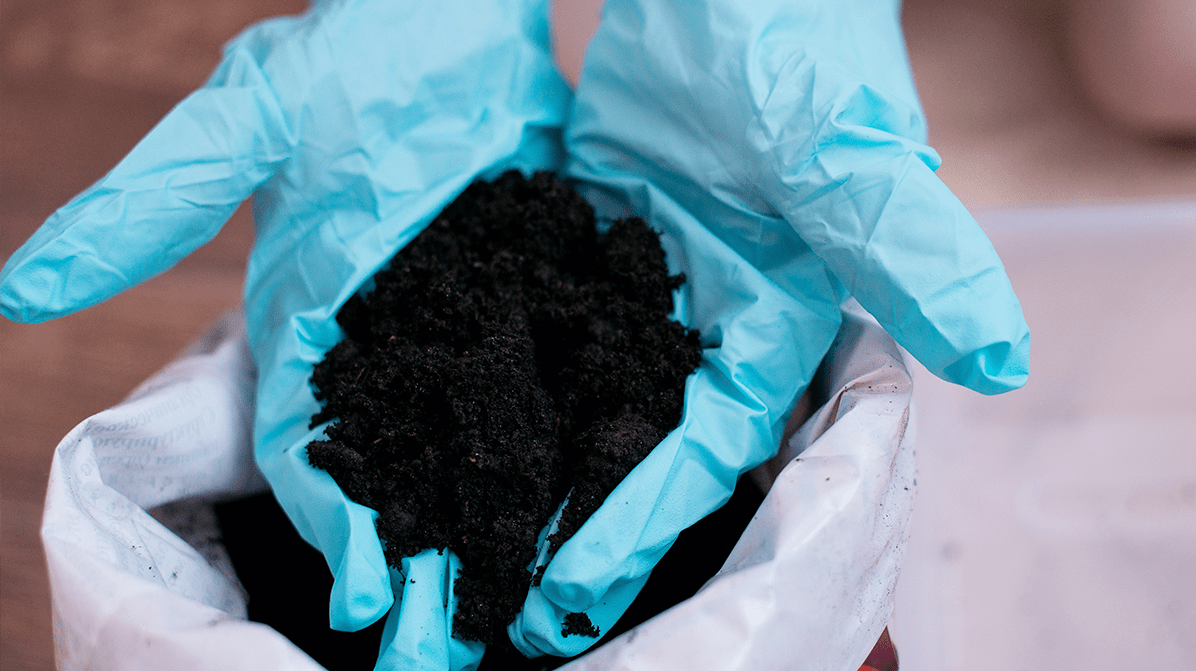
The visit provided an opportunity to observe the operation of the pilot demonstrator first-hand, collect samples of the biochar produced through the gasification process, and prepare the next phase of agronomic field trials with local farmers.
This new stage brings together renewable energy production and one of Ficosterra’s core areas of expertise: developing science-based solutions that improve agricultural productivity, enhance soil fertility and promote long-term soil health.
A new phase of work in South Africa
The South African REFFECT AFRICA demonstrator has been designed to generate renewable energy through biomass gasification, using wood chips and pruning residues as feedstock. The Cape Town facility is the project’s third pilot plant, alongside those established in Ghana and Morocco.
In addition to renewable energy, the gasification process produces biochar, a carbon-rich material with significant potential for agricultural use. However, before it can be applied in the field, its properties must be thoroughly evaluated. Ficosterra’s role is to determine the conditions under which this by-product can become a safe and effective resource for local farmers.
Before travelling to South Africa, Ficosterra asked the South African engineering company Energy Drop to conduct an initial microplot trial using the biochar produced at the pilot plant. The preliminary results were not entirely satisfactory, with indications of possible phytotoxic effects. As a result, representative samples were collected and sent to Spain for detailed laboratory analysis.
This decision reflects one of Ficosterra’s core principles: biochar should not be recommended for agricultural use until its composition, physicochemical properties and interactions with soil and plants have been thoroughly understood.
Analyse before application: the importance of scientific validation
Not all biochars are the same. Their characteristics vary depending on several factors, including the type of biomass used, the operating conditions and temperature of the gasification process, and the presence of specific compounds generated during production.
For this reason, biochar characterization is an essential step before developing agricultural applications of biochar. The laboratory analyses will determine whether the material meets the quality parameters required for field application, compare the results with recognised agronomic standards and establish whether the initial trial should be repeated.
At the same time, a second line of work has been launched using commercially available agricultural biochar already employed by local growers. During the visit, Ficosterra initiated a full-scale agronomic field trial in a recently transplanted spinach crop to assess the performance of this material under South African farming conditions.
The trial is being jointly monitored by the teams from Energy Drop and Ficosterra, while laboratory analyses continue the biochar samples collected from the gasification plant. The findings from both activities will provide the scientific evidence needed to support future sustainable agriculture practices and determine the most effective strategies for the safe and responsible use of biochar in the field.
The initiative is co-funded by the European Union under the Horizon 2020 Research and Innovation Programme, within a call supporting the green transition and energy cooperation between Europe and Africa. The project has a total budget of €8,100,151.25, including an EU contribution of €6,962,820.78, under Grant Agreement No. 101036900.
Bringing together 29 partners from 16 European and African countries, REFFECT AFRICA aims to develop, adapt and validate innovative renewable energy solutions based on the valorization of agricultural and agri-food waste through biomass gasification technologies.
To achieve this objective, the project has established three pilot demonstrators in Morocco, Ghana and South Africa, where the proposed technologies are being tested under different environmental, economic and social conditions.
Each demonstrator addresses a specific scenario—including rural and urban environments, as well as on-grid and off-grid energy systems—to develop sustainable, scalable and locally adapted energy solutions that can be replicated across different regions of Africa.
Beyond renewable energy production, REFFECT AFRICA also explores the valorization of process by-products, the availability of water quality monitoring services, and the interactions between water, energy and food systems through the Water-Energy-Food (WEF) Nexus approach, promoting integrated solutions for more resilient and sustainable communities.
The University of Jaén and Professor David Vera lead the project
REFFECT AFRICA is coordinated by the University of Jaén (UJA) through the Department of Electrical Engineering at the Linares Higher Polytechnic School.
The project is led by Professor David Vera Candeas, researcher and lecturer at the University of Jaén, who coordinates the collaboration between the European and African organisations participating in the consortium.
Under the scientific leadership of the University of Jaén, the project integrates expertise across multiple disciplines—including renewable energy, electrical engineering, water management, waste valorization, sustainable agriculture, capacity building and the development of innovative business models—to deliver practical solutions tailored to local needs. REFFECT AFRICA represents a strong example of public-private collaboration, bringing together universities, research centres, technology institutes, companies, public authorities and civil society organisations. Its ultimate goal is to transform scientific research into innovative solutions that can be successfully implemented under real-life conditions, contributing to the transition towards a circular bioeconomy and more sustainable agricultural systems.
The company brings extensive expertise in soil restoration, the agronomic assessment of organic materials, composting technologies and the development of sustainable fertilization solutions. Within the project, Ficosterra’s activities include:
Evaluating the biochar produced by the gasification units.
Assessing its potential use as an organic soil amendment.
Designing and monitoring agronomic field trials.
Developing recommendations tailored to local crops and soil conditions.
Providing training and facilitating technology transfer to local farmers.
Investigating combinations of biochar, compost and other organic materials.
In this way, Ficosterra acts as the bridge between biomass gasification technology and its practical application in agriculture, ensuring that every proposed solution is assessed in terms of effectiveness, safety and suitability for the specific agronomic conditions of each region.
This work builds on Ficosterra’s long-standing experience in sustainable agriculture, soil regeneration, biofertilizers, and the development of innovative technologies designed to reduce dependence on conventional agricultural inputs while improving soil health and resource efficiency.
Working directly with local farmers
During the mission to South Africa, Ficosterra and Energy Drop visited farms in the Cape Town area and held small-group meetings with local farmers.
These meetings provided an opportunity to explain the characteristics and potential of biochar, gain a better understanding of local farming practices, and exchange knowledge directly with the growers who may ultimately adopt the solutions being evaluated within REFFECT AFRICA.
The active involvement of farmers is essential to ensure that scientific findings can be translated into practical agricultural solutions. Research should not remain confined to the laboratory; innovative technologies must be validated under real farming conditions, taking into account local soils, climate, crop management practices and production systems.
Next steps in South Africa
The work initiated during this mission will continue along several complementary lines.
The first priority is to complete the laboratory characterization of the biochar collected from the pilot plant. The results will determine whether the material is suitable for agricultural use, whether any pre-treatment is required, or whether specific parameters of the biomass gasification process should be adjusted to improve the quality of the final product.
The objective is not simply to demonstrate that biochar can be incorporated into agricultural soils, but to identify which type of biochar should be used, at what application rate, under which agronomic conditions, and with what impact on crop performance, soil fertility and long-term soil health.
Esta web utiliza cookies para que podamos ofrecerte la mejor experiencia de usuario posible. La información de las cookies se almacena en tu navegador y realiza funciones tales como reconocerte cuando vuelves a nuestra web, o ayudar a nuestro equipo a comprender qué secciones de la web encuentras más interesantes y útiles.
Más info en nuestra política completa sobre cookies y también en nuestra política completa de privacidad y avisos legales.
Esta web utiliza cookies para que podamos ofrecerte la mejor experiencia de usuario posible. La información de las cookies se almacena en tu navegador y realiza funciones tales como reconocerte cuando vuelves a nuestra web o ayudar a nuestro equipo a comprender qué secciones de la web encuentras más interesantes y útiles. Más info en nuestra política completa sobre cookies y también en nuestra política completa de privacidad y avisos legales.
Las cookies necesarias son absolutamente esenciales para que el sitio web funcione correctamente. Esta categoría solo incluye cookies que garantizan funcionalidades básicas y características de seguridad del sitio web. Estas cookies no almacenan ninguna información personal.
Para permitir el uso de cookies no necesarias, necesitamos el consentimiento del usuario. Si deseas permitir el uso de las cookies no necesarias, habilita esta casilla. Podrás retirar en todo momento el consentimiento para el uso de este tipo de cookies, en la pestaña inferior de configuración de cookies de nuestro sitio web.
“Expedientes Nº08/25/BU/0017 y Nº08/25/BU/0055
Expansión internacional y consolidación de mercados para Ficosterra
Proyecto de subvención destinadas a financiar proyectos de expansión internacional de las PYMES de Castilla y León (2025), con el objetivo de impulsar su presencia en nuevos mercados exteriores y fortalecer su competitividad a nivel global”