“Expedientes Nº08/25/BU/0017 y Nº08/25/BU/0055
Expansión internacional y consolidación de mercados para Ficosterra
Proyecto de subvención destinadas a financiar proyectos de expansión internacional de las PYMES de Castilla y León (2025), con el objetivo de impulsar su presencia en nuevos mercados exteriores y fortalecer su competitividad a nivel global”
Nutrient use efficiency: The key to developing your crops
October 1, 2024Biostimulants: definition, composition, benefits, and applications
October 11, 2024Discover the only effective method to compost with algae and transform your garden with this nutrient-rich fertilizer. It works!
Before reading this article, we recommend exploring whether homemade compost is the best option for you. To do this, we suggest reading this article.

Forget about outdated methods:
we present a new method to make compost with guaranteed results.
Are you tired of reading the same old advice on how to make compost? Those homemade methods that “everyone” recommends, but in the end, don’t give you the results you expect… Forget about that! In this article, we explain step by step how to make compost with algae the right way. We guarantee the ease of the process and its results.
If you have never used algae for composting, Ficosterra introduces you to its composting method, super easy and simple enough that even a beginner can do it.

What is compost and
what are its benefits?
Compost is essentially “enhanced soil.” It’s what you get when food scraps and other organic materials decompose and turn into a nutrient-rich natural fertilizer. Instead of throwing away fruit peels, vegetable scraps, and dry leaves, you can use them to make your garden thrive.
Why make compost?

It’s free
Forget about buying expensive fertilizers.

It’s eco-friendly
Reduces waste and helps the environment.

Improves soil
Makes your plants grow stronger and healthier.
Why use seaweed in your compost?
Now, why add algae?
The answer is simple: algae are packed with nutrients that your plants will appreciate. They contain potassium, calcium, magnesium, and many more minerals that will give your crops and plants a good boost. Additionally, they help the compost decompose faster.

Advantages of using algae

Super
nutritious
Provide concentrated macro and micronutrients not easily found in other organic materials. We share this article on how algae bokashi improves your crop production, so you have specific information.

Accelerate
composting
Their microorganisms help your compost be ready sooner.

Improve water
retention
And act as soil regenerators
Step-by-step: How to make compost with seaweed
You don’t need to be an expert or follow strange tricks to make compost with algae. Let’s go through the basics, step by step.
1. Gather your materials
You need “green” and “brown” organic matter.
- Green: Fresh waste like food scraps, freshly cut grass, and of course, algae!
- Brown: Dry waste like leaves, small branches, unprinted cardboard, or paper.
Proportions: Two parts of “brown” waste to one part of
“green” waste.


2. Prepare the algae
If you have fresh seaweed from the beach, it is important to wash it first with fresh water to remove the salt. Then, cut it into small pieces so that it decomposes more quickly.
3. Create layers
Start with a layer of “brown” waste at the bottom (this helps with drainage). Then, add a layer of “green” waste, including the algae. Continue alternating layers of “brown” and “green.”


4. Turn your compost regularly:
Every two or three weeks, turn your compost. This introduces air into the mix and speeds up decomposition. It also prevents it from becoming too wet or dry.
5. Maintain the correct moisture:
The compost should be as moist as a wrung-out sponge, neither soaked nor dry. If it’s too dry, add some water; if it’s too wet, add more “brown” waste.


6. Wait during 3-6 months:
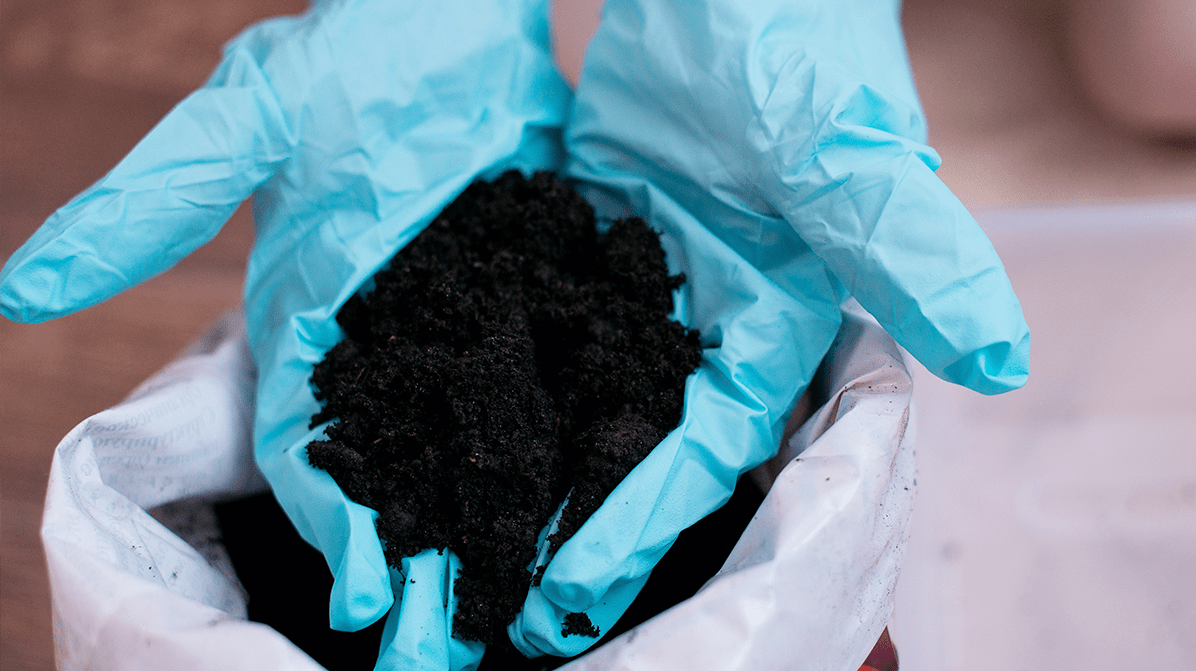
After about 3 to 6 months, depending on conditions, your compost will be ready. You’ll know it’s done when it has a dark color and smells like fresh earth. If you want to speed up the composting process, you can use our bio-stimulant Ficosagro, which contains microorganisms that digest organic matter.
What not to put in compost:
Not everything can go into compost. To make it work well, avoid these elements:
- Meat, bones, and dairy products (they can attract pests and smell bad).
- Oils and fats.
- Diseased or pest-infested plant remains.
- Any plant or waste treated with chemicals.

What’s the next step?
Once you have your compost, use it to improve soil quality. You can:
- Mix it with garden or vegetable patch soil.
- Add it to pots to improve water retention.
- Use it as mulch to protect plants from the cold and retain moisture.

Frequently asked questions about algae
compost
1. Can I use fresh or dried algae?
Both work well. If using fresh algae, make sure to wash them. Dried algae can be mixed as is.
2. Will algae make my compost smell bad?
No, as long as you mix them well with other materials and turn the compost regularly, it won’t smell bad.
3. Does algae compost take longer to make?
Actually, algae can speed up the decomposition process if used correctly.
4. Can I use any type of algae?
Most seaweeds work, but avoid contaminated algae or those collected in areas with heavy industrial activity.
5. What if I add too much algae?
The compost might become too wet, so balance it with enough “brown” waste.
6. Where can I get algae if I don’t live near the sea?
Some garden stores sell dried or powdered algae, which work just as well.
Conclusion
Making compost is one of the easiest and most effective ways to improve your garden, but if you want a fertilizer that makes a difference, add seaweed. With this method, you’ll have quality compost that will make your garden look healthier and stronger than ever.
If you liked this article and still have questions, Ficosterra has a team of highly qualified specialists who will be happy to answer all your questions and share their knowledge with you.
